
Ottawa County Mugshot Roster Limits
The Ottawa County inmate lookup is explicit: it displays only current in-custody people. It is not a list of released inmates, and it publishes no released-photo retention window. A photo visible with a live record, if the current interface supplies one, is tied to booking and present custody. Once the person drops out, the page offers no documented archive route.
Absence does not establish why the record vanished. The person may have left on bond, finished a jail term, transferred to MDOC or another authority, or stopped appearing due to timing or a search mismatch. Confirm release through the OCSO booking/release record, a VINE event, and the court docket. Then request the image by exact booking if the photograph itself is needed.
The official Ottawa search form documents the current-only rule that governs released-inmate mugshot searches.
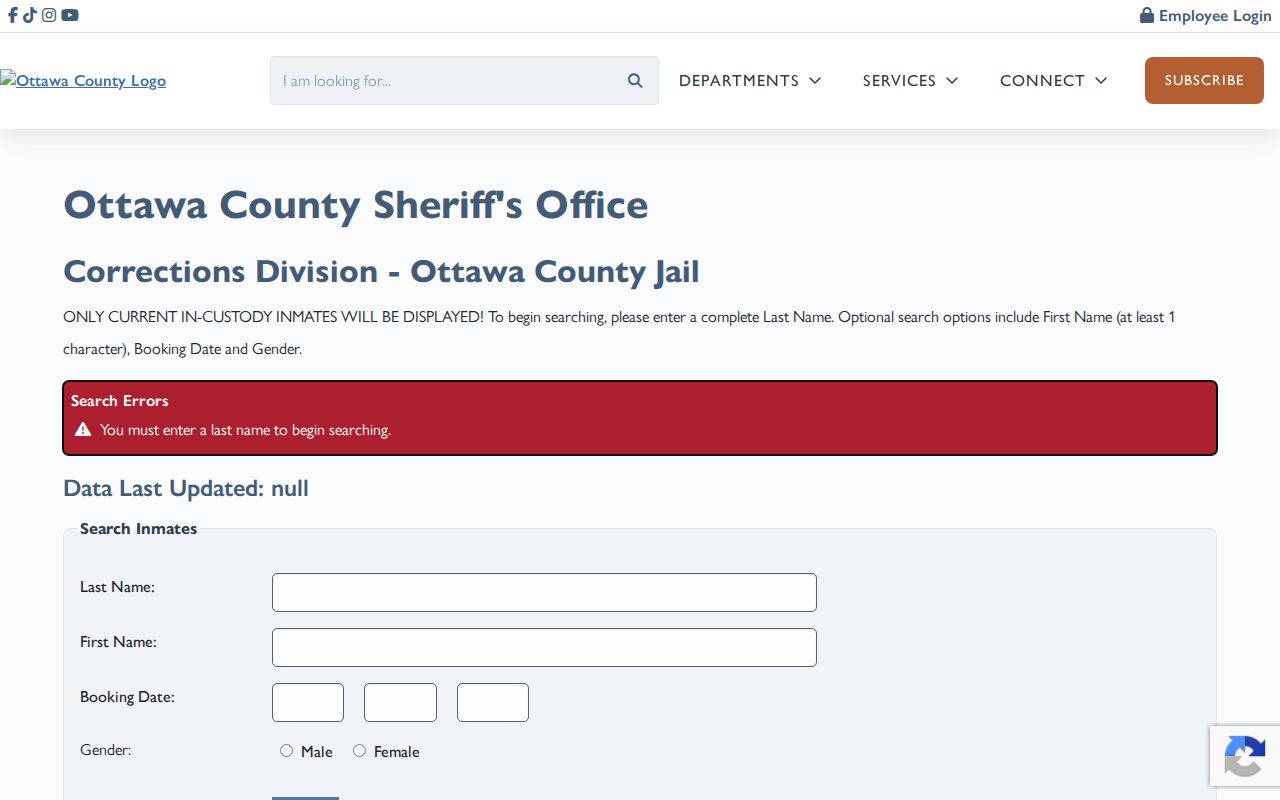
The interface should be used to classify current custody, not to infer a release date or create a photo history.
Request Ottawa County Booking Photos
The strongest local route is an OCSO records request. Ask for the associated front-view booking photograph as a separate responsive item and identify the exact booking. Include the full booked name, approximate admission date, date of birth or booking number if known, and the related case. Also ask for the booking and release fields needed to connect the image to the right custody event.
- Confirm that Ottawa County Jail, not a city lockup or MDOC, created the photograph.
- Identify the admission with a booking number, date range, and court or case number.
- Request the booking photograph as a distinct record, along with booking and release date fields.
- Ask for electronic delivery and an itemized cost estimate before labor-intensive work.
- Keep the agency caption, booking date, response, and any redaction or exemption explanation with the image.
Submit online through the Ottawa County FOIA Center, or use mail, fax, or in-person channels listed by the Sheriff’s Records Unit. OCSO says an in-person report is not produced on the spot. Michigan FOIA generally gives the agency five business days to respond and permits one ten-business-day extension. Costs depend on actual work. A record-specific exemption or redaction may apply.
The county’s official FOIA portal shows the starting point for an Ottawa County booking-photo request.
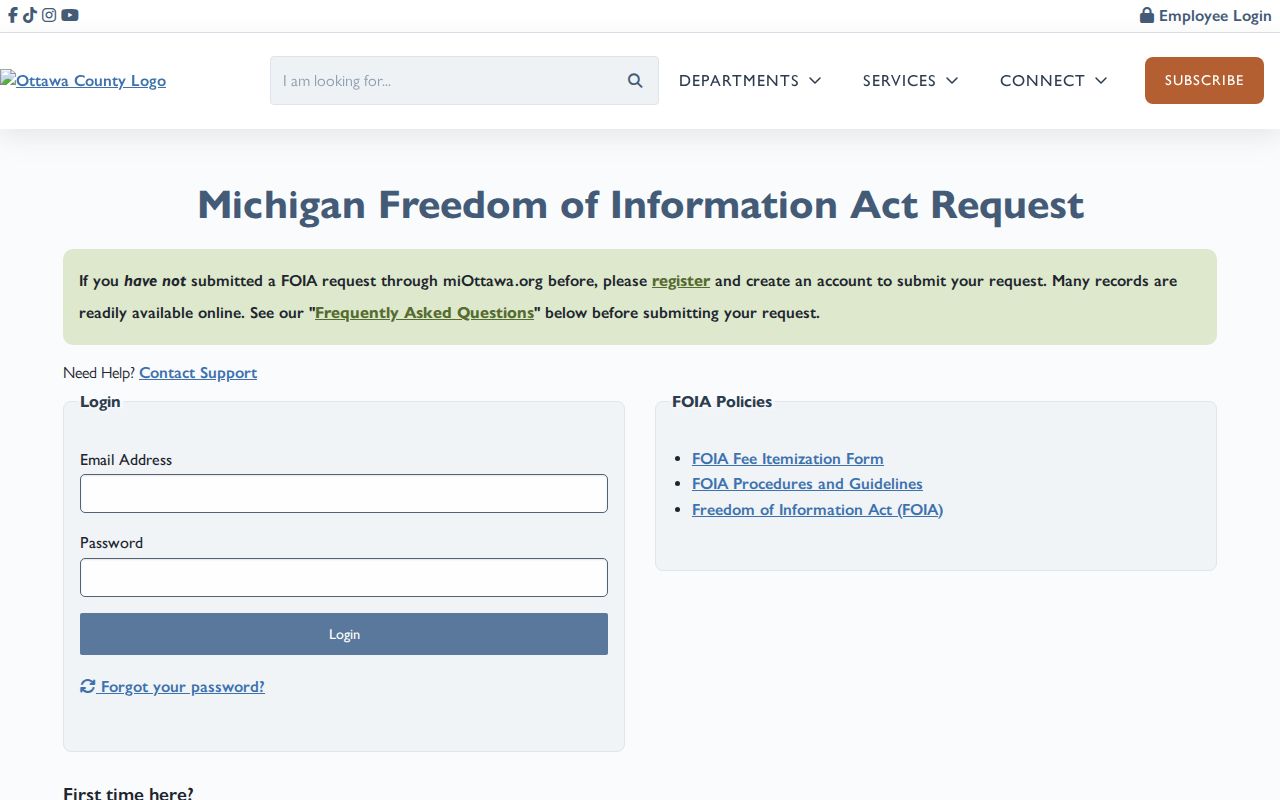
The portal begins the records process. It does not guarantee that every requested image will be disclosed without redaction or a lawful exemption.
Ottawa County Photo Record Context
A booking photograph documents appearance at admission. It does not prove guilt, current custody, or present appearance. Keep it with the agency name, booking date, booking identifier, charge source, and later case disposition. An arrest and a conviction are different events. A court dismissal, acquittal, sentence, or later set-aside can materially change what a reader understands.
Michigan appellate authority in Patterson v Allegan County Sheriff treated a sheriff-held booking photo as a public record and rejected a categorical privacy-exemption theory. That does not make every image automatically available. Michigan FOIA still requires record-specific analysis, and active-investigation, privacy, security, juvenile, sealed, or other nonpublic limits can control a response.
| Keep with the image | Why it matters |
|---|---|
| Creating agency | Separates an OCSO booking photo from an MDOC image |
| Booking date and number | Ties the photo to one admission |
| Release disposition | Shows whether custody ended or transferred |
| Court case and later order | Supplies disposition and current public-record context |
| Access date | Records when the official source displayed or produced it |
Ottawa County Sheriff App Photos
OCSO has an official iOS app. Its App Store listing identifies the sheriff’s office as developer and advertises public inmate views and news releases. The listing does not document a recent-release feed, a mugshot archive, or a 24-hour or 72-hour photo filter. Treat it only as a supplemental current-information channel.
The manifest image captures the official developer and the limited feature description that can be supported.
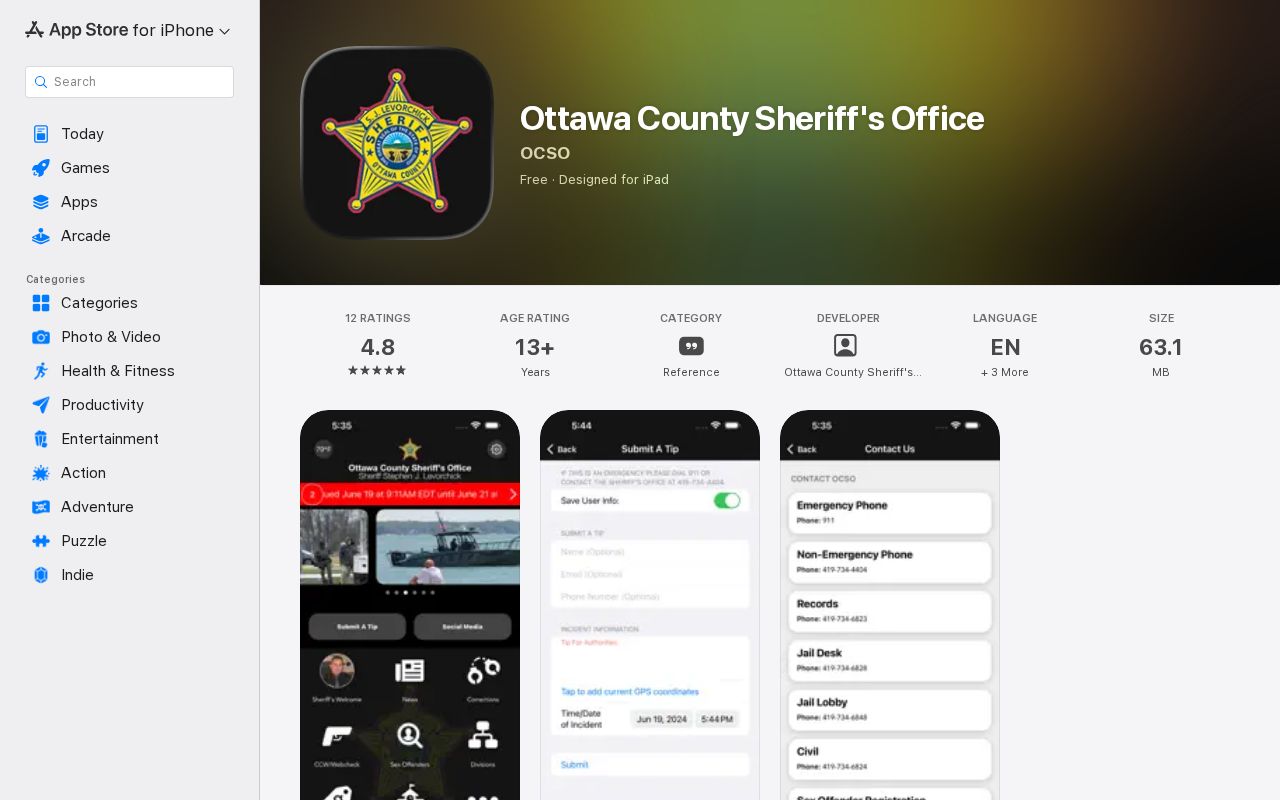
An app screen should be described only as observed. A current inmate view cannot be relabeled as historical release evidence.
Ottawa County OTIS Offender Images
For an Ottawa County case that led to an MDOC prison sentence, OTIS may show a state offender image. It is not necessarily the Ottawa County booking photo. MDOC created or maintains that correctional image within a separate statewide record. The record may remain visible while a person is on parole and generally for three years after supervision discharge, subject to statutory exceptions.
MDOC warns that some OTIS records do not have electronic photographs. This can occur when an image was not taken or when the person left before electronic images were available. A missing photo should be reported as missing. Do not fill the gap with an image from an unrelated booking, a news story, or another person with a similar name.
Search the OTIS application by MDOC number when known. Compare the identity, status, sentence, and supervision fields. If the need is the county’s original admission image, return to OCSO and name the exact booking rather than treating the OTIS image as interchangeable.
Ottawa County Clean Slate Photos
Michigan’s automatic Clean Slate process began April 11, 2023. Qualifying convictions can become nonpublic after statutory periods. The Michigan State Police set-aside information explains the official process, while MCL 780.621g, 780.622, and 780.623 govern key effects and government records. Court rules require set-aside conviction information to be redacted from public release even though authorized nonpublic government records can remain.
A case or image disappearing from a public source is not proof that the historical custody event never occurred. It can reflect a lawful change in access. Old saved copies should not override the current official source. Remove or qualify stale material when a public record is set aside, sealed, corrected, or no longer lawfully available.
Clean Slate also explains why a photo should never be separated from its date and legal context. A static image can linger long after the public court record changes. Current official records govern.
Ottawa County Mugshot Publication Law
Michigan FOIA, MCL 15.231 through 15.246, controls access to sheriff-held records subject to exemptions. Court records follow MCR 8.119 rather than an executive-branch FOIA request. A request can seek an existing booking image. It cannot force the agency to create a new photo record or certify an inference about release.
No enacted Michigan anti-pay-to-remove law was identified in the official sources reviewed as of July 24, 2026. That finding should be stated with its date and limit. A proposed bill is not current law, and a rule from another state should not be generalized to Ottawa County. The safe route is to rely on Michigan FOIA, court access rules, set-aside law, and record-specific privacy limits.
Federal channels differ. The BOP Inmate Locator is not a public mugshot database. U.S. Marshals Service policy does not treat prisoner photos as routine public information, and the ICE locator is a custody locator rather than a promised booking-photo source. A federal or immigration search gap cannot be filled with an Ottawa County image.
City custody is separate as well. Holland Department of Public Safety operates a short-term booking and lockup function for a city spanning Ottawa and Allegan Counties. A person may be released by police or sent to the county jail that has jurisdiction. Confirm the incident location and receiving agency before asking OCSO for a photograph. If Holland DPS created the only booking record, its Services Division is the correct records custodian. An absent Ottawa image does not permit use of another county’s photograph.
Use Ottawa County Photos Carefully
Booking images should remain records-oriented and factual. Avoid galleries, ridicule, face-search tools, “most wanted” styling, and claims based on appearance. News releases may contain agency-supplied arrest images in matters of public interest, but each release documents a specific publication decision. It is not a complete photo source for people who left custody.
Commercial arrest pages can be stale, identify the wrong person, omit the case outcome, and charge for removal. They should not be used as the primary confirmation of a release or as an official photo source. Recheck OCSO, the court, and OTIS where applicable. If a produced image is wrong, preserve the agency response and identify the disputed booking to the record custodian.
A purpose-neutral records check asks whether one identified booking photograph exists and how it relates to an official custody event. It does not turn the image into a judgment about the person.
Keep an audit trail when a photo is used in a court or records matter. Save the agency response, source URL, access date, booking identifier, and later correction. If OCSO changes a field, preserve both the original response and the correction notice. For a court-derived error, contact the clerk. For an OTIS photo or status problem, follow MDOC’s correction path. These steps keep the image tied to the government record that can confirm or amend it.